Hickock and Smith’s Kansas City forged-check spree
In Cold BloodHickock and Smith’s Kansas City forged-check spree transformed a plan for escape into a day of calculated shopping and fraud. On November 20, 1959, Dick passed checks at a series of businesses while Perry Smith accompanied him as a largely silent partner. They left with cash and goods that could be pawned or sold, enough, in Perry’s estimation, to make Mexico seem attainable. The spree also left a trace: sellers later identified the two men and helped investigators confirm their movements and partnership.
Background and division of roles
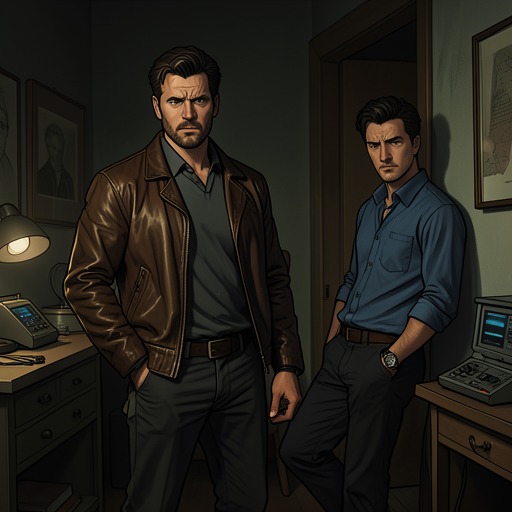
The episode is presented through Perry’s view of Dick’s ability to talk his way through a transaction. Perry had never passed a check before and felt nervous about his assigned part: to stand beside Dick, avoid drawing attention, and follow his lead. Dick supplied the story. At a Kansas City clothing store, he introduced Perry as a friend preparing to marry and described himself as the best man helping him choose clothes. The supposed wedding and honeymoon gave the shopping an ordinary explanation, while Perry’s silence kept him from having to sustain the fiction himself.
Dick turned that invented occasion into an opening for a fraudulent payment. After the clerk had selected clothes for Perry, Dick acted as if he had forgotten his wallet. The clerk supplied a blank check; Dick wrote it for eighty dollars more than the bill and received the difference in cash. Perry thought the deception was too clumsy to succeed, but the clerk accepted the check. The scene established the pattern of the day: Dick did the talking and handled the payment, while Perry stood by as the apparent companion whose presence helped the story seem plausible.
Purchases and proceeds
The false wedding continued at Best Jewelry, where the pair used a check to obtain a diamond engagement ring and a diamond wedding band. They then pawned both rings for a hundred and fifty dollars. Perry was reluctant to see them go. He had begun to invest the imaginary bride with a personality of his own: in his private version she was not the wealthy, glamorous woman Dick had described, but a gently spoken, intellectual sort of person he had long wanted to meet. The rings were merchandise to convert into money, yet for Perry they briefly carried the possibility of a life he had not lived.
The pair continued from jewelry to other saleable goods. At Goldman’s they obtained a man’s gold wristwatch; at an Elko camera store they acquired an elaborate motion-picture camera. Dick regarded cameras and television sets as especially useful purchases because they could readily be sold or pawned, and the two went on to target television equipment and several clothing stores, including Shepherd & Foster’s, Rothschild’s, and Shopper’s Paradise. By the time the shops were closing, their pockets held cash and their car was loaded with a varied collection of goods, from clothing and cigarette lighters to expensive equipment and inexpensive accessories.
The haul changed the immediate prospect of the journey. Earlier, Perry had been short of money; now he considered their stake sufficient to reach Mexico and imagined a chance to begin living differently. His admiration for Dick’s fluency was genuine: at points, Perry said in retrospect, he had nearly believed the performance himself. The transaction-by-transaction deception had made an escape fund, but it depended on turning false promises and other people’s trust into money.
The strain behind the success
Perry’s response to the spree was elation, but Dick did not share it. When Perry praised him and offered to buy him a drink, Dick appeared subdued. At a bar, after several drinks, he raised the consequences for his parents. The checks would eventually be returned, and he feared his father would try to make them good despite being old, ill, and without the means to do so. The successful scheme therefore brought its own immediate burden into view: the money that made escape possible could leave Dick’s family facing the losses.
The contrast also clarifies the different meanings the partners attached to their plan. Perry focused on the new chance represented by their cash and merchandise, and the imagined future suggested by the rings. Dick, who had been the spree’s most effective performer, turned instead toward the people left behind and the cost they might bear. Their shared enterprise did not produce a shared mood. The same haul that made Perry feel hopeful prompted Dick to consider the damage waiting for his parents.
Identification and narrative significance
The spree later became a concrete line of evidence in the investigation. When Kansas Bureau of Investigation agent Harold Nye interviewed the reported sellers, witnesses identified Dick as the person who had passed the checks and Perry as his quiet companion. One seller remembered that Dick had handled the transaction with confidence while the other man had scarcely spoken. Nye’s inquiries established that on November 20 Dick had passed at least seven fraudulent checks during the shopping trip. The repeated identifications corroborated Floyd Wells’s account of the men’s activities and connected them to one another through independent witnesses.
In the narrative, the spree is more than a successful episode of deception or a means of financing flight. Its staged wedding makes Perry’s participation legible as both practical and emotionally charged: he acts as Dick’s silent accomplice while entertaining the possibility of the bride the performance invents. Its goods move quickly from purchase to prospective resale, while the imagined domestic future attached to the rings proves fleeting. And its apparent success produces two sharply different aftermaths: Perry’s anticipation of Mexico and Dick’s fear that his parents will be left to answer for the checks. The witnesses’ later identifications turn that day’s performance into an evidentiary record, giving the fraud consequences beyond the money and merchandise it yielded.